




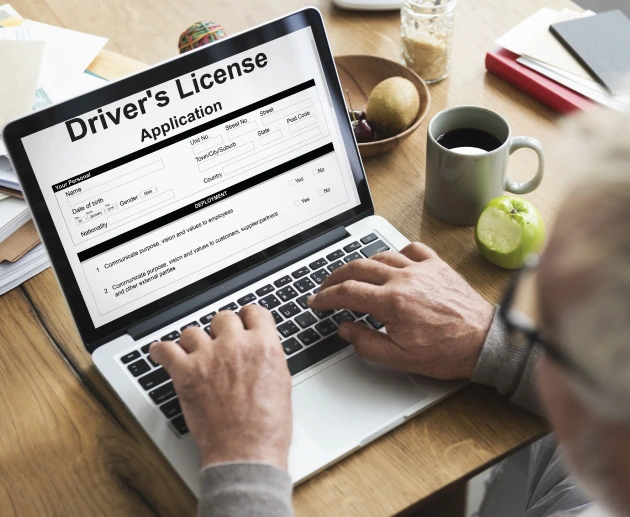
In recent times it has become a lot simpler to get a driving license in India than before, this has become possible due to the new updated rules in 2026. Applying for a license was a headache earlier, the applicant had to stand in long queues and face the pressure of tough driving tests at the RTO. But with the time rules and regulations have changed a lot. Without appearing for the traditional test the eligible category can easily get their license which has been made easier due to the new system introduced by the government.
Driving schools can now assess and certify a candidate’s driving skills, and the approval certification can be submitted to the RTO which can be accepted by them certifying their driving skills. This initiative has been taken to bring down the delays, to make paperwork easy, and ensure that only the driver who has been trained properly gets the license. This online process has made things more convenient, starting from filling to keeping a track of the application. Understanding the updated procedure can help in avoiding the hassle and drive with confidence on Indian roads with all the authentic documents, be it a learners license or a permanent one.
ALSO READ: Stopped By Traffic Police? Understand Your Rights, Fines, And Responsibilities
Importance of a Driving License
- Legal Requirement: It is mandatory in India to have a valid license for driving to ride any vehicle on roads. It is proof that you are a trained driver.
- Driving Skill Proof: A Driving license is a proof that you have passed the test by the government, that ensures that you are capable of handling a vehicle responsibly when under traffic conditions.
- Penalties: Driving without a license can make you pay heavy fines, seizing of the vehicle, or even jail. The punishment depends upon how severity of the offence.
- Proof of Identity: A driving license has name, photo, age and address, making it a valid form of your identity proof which is accepted at airports, banks, and other government offices.
- Accepted Like Other Official IDs: It is recognised as an identification document just like an Aadhaar card, PAN card, or Voter ID, making it useful for multiple official purposes.
- Insurance Claims: If any accident happens, there is a need to submit an insurance company to process the claim. The claim can be rejected if there is no valid license.
- Independence: Having a driving license means you have the freedom to travel and drive wherever you want without depending on others.
- Road Safety: The drivers who have licenses are trained and very well aware about traffic rules, which helps in becoming responsible citizens who maintain order. It helps in reducing road accidents.
ALSO READ: Why Car Insurance Rates Go Up After An Accident: Step By Step Guide
Step-by-Step Guide to Apply and Get a Driving License in India
1. Step 1: Eligibility
- When applying for a license, make sure you meet the category requirements and meet the age criteria.
- You need to be above 16 years of age for driving and applying for 2 wheeler vehicles (without gear: with parental consent), 18 years and above for gear vehicles (LMV) and 20 years and above for any commercial vehicles.
- Before applying you have to be thorough with basic traffic rules.
2. Step 2: Learner’s License
- Search and visit the government’s official Parivahan website or visit RTO nearest to your location. Fill out Form 2 and upload all the important documents (proof of age, address proof, and certificate of medical if needed). Make a payment of Rs 150 to Rs 200.
- After applying, taking an online test is important. The test includes traffic signs and road rules. Once you pass the test you are eligible for a learner license which immediately gets issued and remains valid for a time span of 6 months.
3. Step 3: Learn and Practice Driving
- Once you have a learners license in your hand, another and most important step is to learn and practise driving under the supervision of the person who has a valid license. Put ‘L’ signs with red tape on your vehicles front and back windshield.
- It is suggested to learn driving from a professional or a certified driving school.
4. Step 4: Application for a Permanent License
- Once 30 days are completed after 30 days of receiving your learner license, fill up the Form 4 on the Parivahan portal or by paying a visit to your nearest RTO.
- Attach all the important documents and make a payment of minimum amount Rs 200 to Rs 1000 depending upon your vehicle type. Take an appointment for the test according to your availability at the nearest RTO office, where the RTO officer evaluates your driving skills.
5. Step 5: Get Your License
- Once you pass the final test, the details of your biometric details are recorded and later your permanent driving license is sent to your registered address. Tracking of the status is easily available online
Read More Such Articles On AUTOXP: CLICK MORE


